
Response to January 23, 2026 Dear Colleague Letter
Intent to Restructure Critical Weather Science Infrastructure
March 17, 2026
Dear Director Stone,
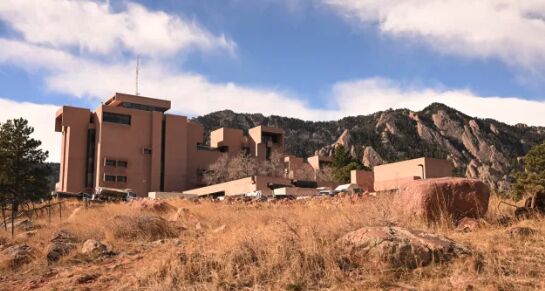
On behalf of the Boulder Chamber and the broad business community we represent, we write to express strong concern regarding proposals that could dismantle or substantially restructure the National Center for Atmospheric Research (NCAR).
For Boulder and the broader national economy, NCAR represents far more than a research facility. It is a foundational component of the innovation ecosystem that connects public science, private industry, and operational decision-making across multiple sectors of the U.S. economy. Businesses across the country depend on the data, modeling tools, and research produced through NCAR to manage risk, protect infrastructure, and support economic growth.
Many of the industries most critical to the American economy rely directly on NCAR’s integrated atmospheric and climate research capabilities. These include:
- Insurance and Reinsurance.
Firms across the insurance and reinsurance sectors depend on long-term atmospheric modeling and extreme-weather risk data produced by NCAR to inform actuarial models, price risk, and maintain financial stability in an era of increasing climate volatility. - Aviation and Aerospace.
Airlines, aircraft manufacturers, aerospace companies, and logistics providers rely on high-resolution weather and atmospheric modeling to support safe operations, optimize flight routes, and improve fuel efficiency. Colorado’s aerospace sector and the national aviation industry benefit directly from NCAR’s modeling capabilities and forecasting improvements. - Finance and Risk Analytics.
Major financial institutions and investment firms increasingly integrate climate and weather data into risk management frameworks, infrastructure financing decisions, and long-term investment strategies. NCAR’s continuity provides a trusted scientific backbone for these analyses. - Transportation Networks – Road and Rail.
Freight operators, rail systems, and transportation infrastructure managers rely on weather modeling to anticipate disruptions, protect supply chains, and maintain operational reliability during extreme weather events. - Emergency Management and Public Safety.
Emergency managers and disaster response agencies rely on forecasting advances and modeling developed at NCAR to improve evacuation timing, wildfire prediction, flood response, and community preparedness. - Utilities and Natural Resources.
Electric utilities, water providers, and natural resource managers use NCAR modeling tools to manage energy demand, grid resilience, drought conditions, reservoir levels, and watershed planning. Reliable forecasting supports both economic stability and public safety. - Recreation and Tourism.
Outdoor recreation industries—including ski resorts, park systems, and tourism operators—rely on seasonal forecasts and snowpack modeling to plan operations and manage economic risk. - Energy and Natural Resource Development.
Energy producers, including the oil and gas sector and emerging renewable energy industries, rely on atmospheric modeling to plan operations, understand environmental conditions, and manage infrastructure risks. - Infrastructure and Construction.
Engineering firms, construction companies, and infrastructure planners rely on long-term climate projections and severe weather modeling to design resilient transportation systems, buildings, and water infrastructure.
NCAR currently supports hundreds of high-skill jobs and anchors a broader ecosystem of research institutions, startups, and technology companies that collaborate on atmospheric science, climate analytics, aerospace technology, and environmental intelligence. For the Boulder region, the institution is a cornerstone of our science and technology economy. For the nation, it is a critical piece of infrastructure supporting innovation and resilience.
Equally important is the integrated nature of NCAR’s capabilities. Atmospheric observations, computational infrastructure, model development, and scientific expertise function as a unified system. Fragmenting these capabilities across multiple entities or privatizing core functions risks weakening the very scientific and operational strengths that industries rely upon.
From a business perspective, continuity matters. Companies across numerous sectors have built operational systems, commercial products, and risk management frameworks on NCAR data platforms and modeling tools. Any restructuring must ensure that these capabilities remain stable, accessible, and integrated.
The Boulder Chamber encourages the National Science Foundation to preserve the institutional integrity of NCAR and maintain the collaborative public-science infrastructure that has allowed both public agencies and private industries to benefit from its work for decades. Maintaining NCAR as an integrated national asset will ensure continued innovation, economic competitiveness, and public safety across the United States.
Thank you for the opportunity to provide input on this important matter.
Sincerely,
John Tayer
President and CEO
Boulder Chamber